
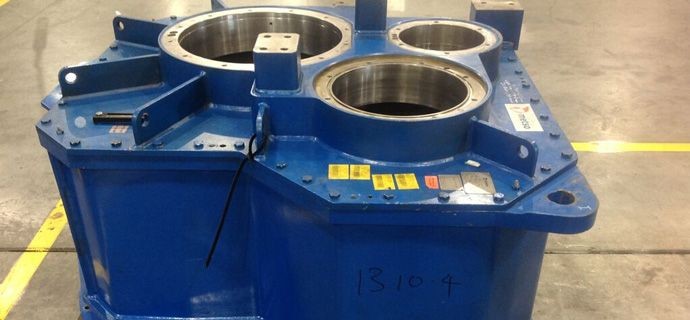
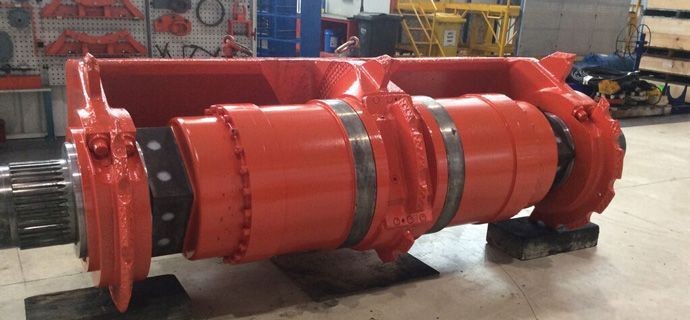
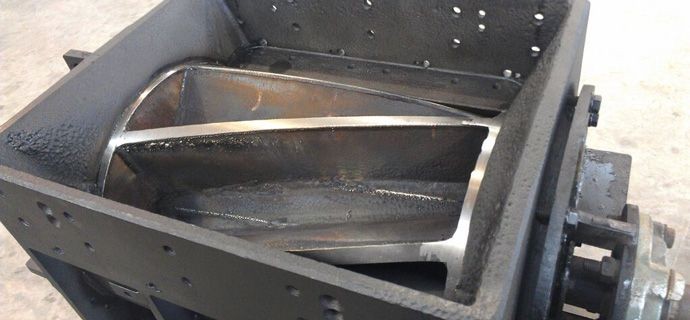
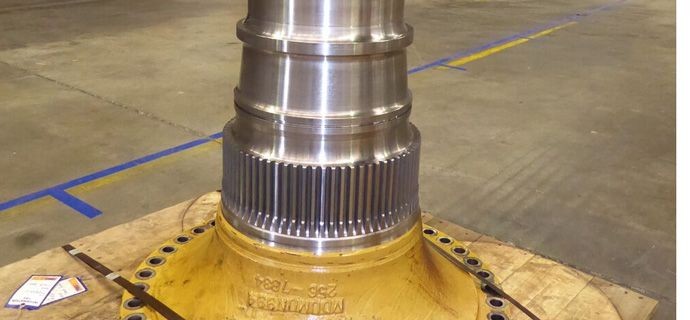
Remanufacturing is the process of returning a product to at least its original performance that is equivalent or better than that of a newly manufactured part. Instead of recycling a worn component, remanufacturing gives it effectively a 2nd life. Capital-intensive components in industries like mining, power generation and fluid handling benefit from reduced energy consumption, costs and lead time. First, the wear mode is identified, then a carefully selected overlay material is applied to worn areas, precision machining brings the part back to original dimensions.
We have a strong commitment to sustainable development and the environment.
Our remanufacturing program is an integral part of our environmental policy.
Laserbond remanufactured, surface engineered parts deliver performance the equivalent of, and in most cases better than the OEM product, at a fraction of the cost. This also reduces the impact on the environment by putting back parts that previously would have been scrapped.
We offer a complete remanufacturing process, starting in our on-site materials science laboratory to fully analyse for damage, stress areas, wear points and material types and ultimately produce a component that is as good as new.
Benefits:
- Proven processes
- Component reliability
- Good for business – maximum productivity with lower operating costs
- Good for the environment – waste reduction
- All component parts inspected, cleaned and replaced if necessary
- Total quality control reman program
- Guaranteed for quality and fit for purpose
The Laserbond Remanufacturing Process
1. Materials Lab Analysis
Positive material identification, part history from client (environment), supported by microscopic and mechanical analysis.
2. Damage Assessment
An experienced engineer assesses the part. Together with the provided part history (if available) and lab analysis the engineer identifies the failure mode and recommend a surface engineering process and material.
3. Surface Engineering
Selection of the right process and material is achieved through the skills and knowledge of specialised surface engineer experts.
4. Precision Machining
Dimensional restoration to OEM drawings or reverse engineering
5. 质量保证
The remanufactured part is assessed by quality. This includes depending on requirements, a dimensional report, NDT (dye-pen, UT, MT)
6. Return to Service
The outcome for the customer is a remanufactured part, which will often outperform the OEM part in terms of reliability and service life. This is achieved at a fraction of the cost.
Frequently Asked Questions
What is remanufacturing?
Remanufacturing is by the standard BS 8887-2:2009 defined as, returning a product to at least its original performance with a warranty that is equivalent or better than that of a newly manufactured part.
How is remanufacturing different from repair?
Remanufacturing is different from repair. Repair means, that the functionality/usability for continued service is, at least temporarily restored. A repair may or may not meet original specification. Remanufacturing means a complete disassembling of the component, It includes an inspection, a rebuild to the original (or better) specification, and quality assessment.
What components can be remanufactured?
Components that can be remanufactured are wide-ranging, covering all industries. Examples include drive spindles in mining trucks, hydraulic cylinders in marine and mining; valves and turbine shafts in power generation; impeller, volutes and housings in fluid handling. These wear parts justify remanufacturing over replacement due to high capital cost and long lead times for new components
What are the cost benefits of remanufacturing vs new parts?
In my experience the cost benefits of remanufacturing vs a new part is higher the more capital intensive a part is. For example, a high pressure super duplex pump can be remanufactured for 10% of the cost of a new pump.
Is remanufacturing more sustainable than replacement?
Yes, remanufacturing is more sustainable than a replacement. Less raw material (-80%) and energy(-85%) is required compared to manufacturing a new part. Remanufacturing uses mainly the original manufactured material, so no energy use for producing raw material is required.
 ZH
ZH  EN
EN  JA
JA  AR
AR  HI
HI  BN
BN  ES
ES  PT
PT  IT
IT  FR
FR  DE
DE