About Laser Cladding
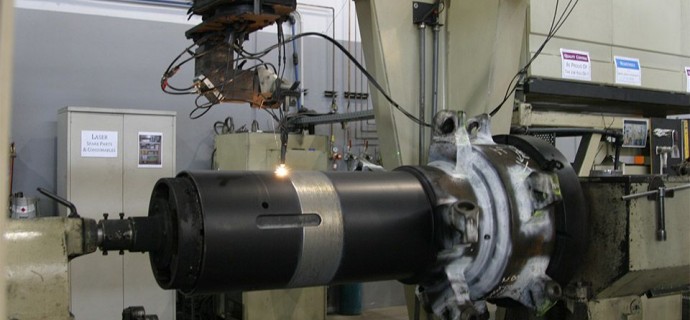
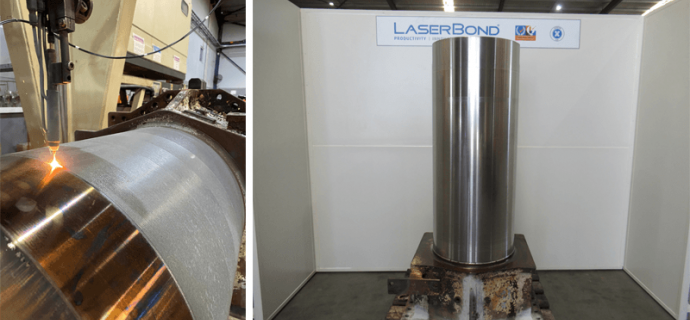
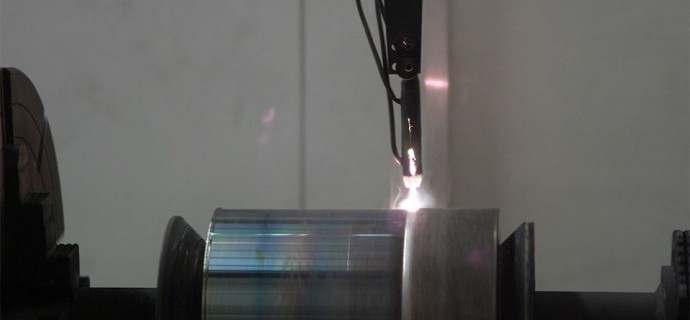
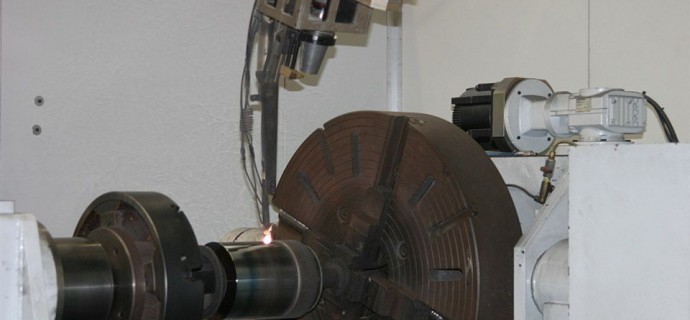
Laser Cladding, also called Laser Metal Deposition (LMD) is a high performance additive manufacturing procedure which utilises precisely-controlled energy from a high power laser to metallurgically-bond a surfacing material to a substrate to provide very high performance surfaces to new parts for extended operating life. With this precise control, a welded or metallurgical bond is achieved with minimal impacts and effects of heat on both the substrate and surface material.
Laserbond® Cladding technologies offer a broad spectrum of industries confronting component and equipment wear issues significant opportunities to reduce maintenance costs and enhance operating performance.
Benefits:
- Limited dilution of coating for maximum purity and performance
- Precise, fully-fused deposit layer
- Short processing time minimises heat spread and impact
- Improves component wear performance
- Cost effective component life extension
- Can be used to reclaim worn or fatigued components
- Reduces maintenance and part replacement costs
- Suitable for sensitive components
Applications:
- High erosion from liquid or gas flows
- High impact conditions
- Part-to-part wear and abrasion
Frequently Asked Questions
What is laser cladding?
Laser cladding is a coating process where a laser melts metal powder or wire onto a substrate, forming a fused, metallurgically bonded overlay. It is used to remanufacture worn parts, apply wear and corrosion-resistant coatings, or add features to components layer by layer. Another term commonly used is Laser Metal Deposition LMD.
How does laser cladding work?
A focused laser creates a melt pool on the part’s surface. Powder is injected into this pool, shielded by gas to prevent oxidation, forming a metallurgical bond with the substrate. Unlike arc or PTA welding, dilution (substrate mixed into the clad) stays below 5%. Moving the laser across the part produces a dense, pore-free coating.
What is the difference between laser cladding and thermal spraying?
The difference between laser cladding and thermal spraying is the bonding mechanism of the cladding. Laser cladding creates a strong metallurgical bond whereas thermal spray coatings adhere by mechanical interlocking to a grit blasted surface with bond strength up to >80 MPa.
What industries use laser cladding?
Laser Cladding is used in many industries today. Examples include including hard chrome replacement for struts on mining trucks, claddings for boiler tubes to protect them from erosion and corrosive, remanufacturing of pump components in aggressive environments, wear resistant overlays for agricultural knifes and tools.
Is laser cladding better than hard chrome plating?
Yes. The advantages of laser cladding over hard chrome plating are
- No toxic hexavalent chromium is used
- No maximum coating thickness
- Variety of coating materials to suit the application environment
- Dense, crack free coating to avoid under corrosion that leads to catastrophic failure
What is the maximum thickness Laserbond can laser clad?
The maximum thickness Laserbond can laser clad is limited by economical considerations, not technical ones. There is no maximum coating thickness that can be laser clad. Laserbond applies routinely 10 mm and more thick layers on components for remanufacturing and very thick wear resistant claddings.
What materials can be applied using laser cladding?
All materials that are metallurgical compatible to the base material. For steel substrates commonly used are stainless steels, Nickel-superalloys, Cobalt-based materials, Nickel/WC hard facings, bronzes. Laser cladding, in contrast to traditional welding processes, applies little heat to the substrate material, so that even materials that are deemed unweldable, such as cast irons, can be clad.
 DE
DE  EN
EN  JA
JA  AR
AR  HI
HI  BN
BN  ES
ES  ZH
ZH  PT
PT  IT
IT  FR
FR